Ongoing research
Space Robotics Rover R&D
Designing the frame and mounting interfaces for a terrain-mapping research rover, from CAD layout to physical assembly.
- My role
- Frame design & mechanical interfaces
- Objective
- Develop a chassis for terrain-mapping research
- Tools & methods
- SolidWorks · T-slot assembly · McMaster-Carr components
- Current result / status
- CAD and physical assembly in progress
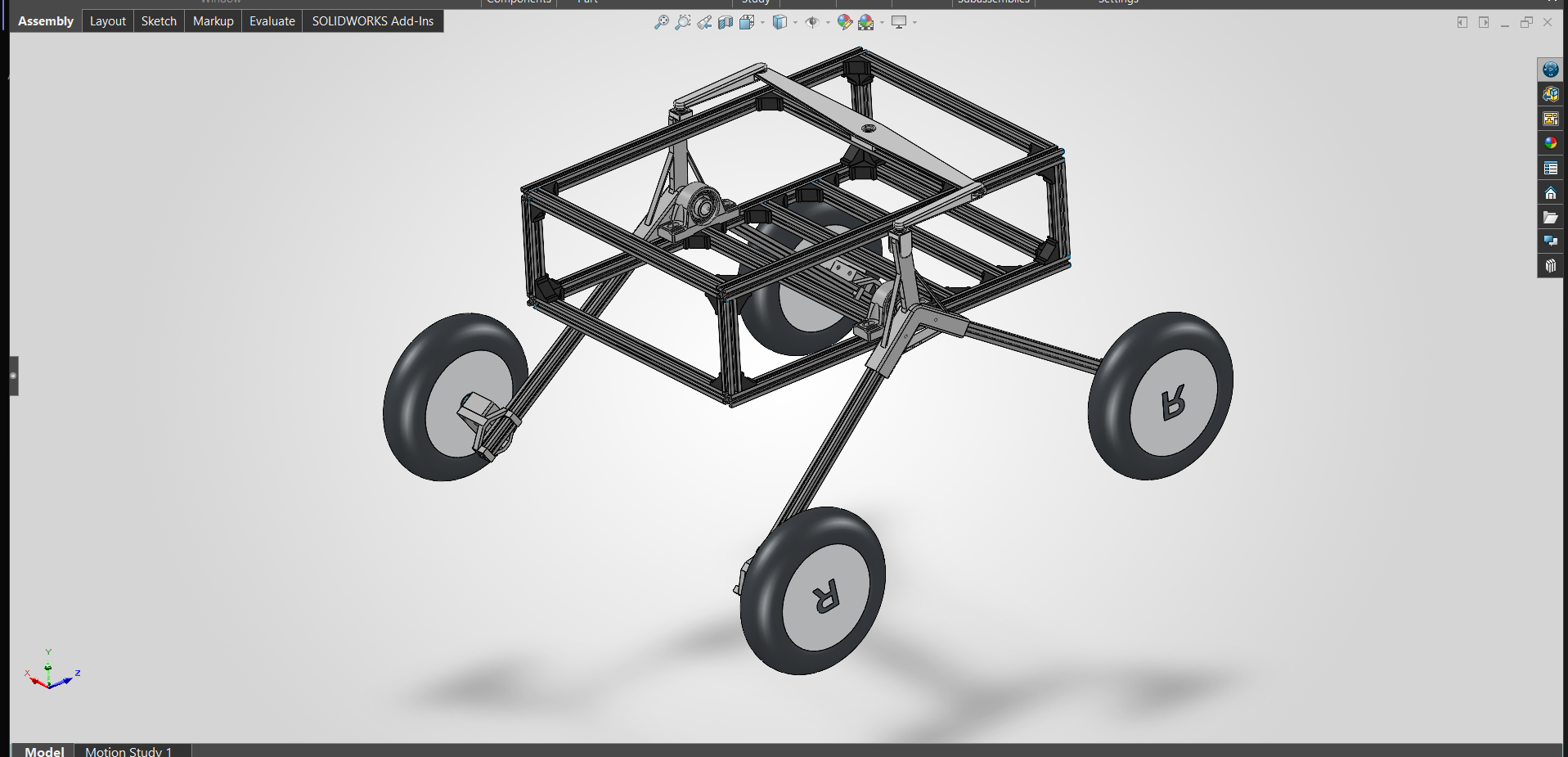
My responsibility: the rover frame
In Embry-Riddle’s Space Robotics and Generative Estimation (SRGE) Lab, led by Dr. Cagri Kilic, I’m responsible for the rover frame. My work covers the T-slot chassis, bracket geometry, and bearing selection, with attention to how the frame connects to the mobility hardware.
The frame establishes mounting locations and carries loads from the suspension into the body. Alignment, assembly access, and space for research hardware guide the layout. This is my subsystem responsibility within the lab’s larger rover project.
Assembly in progress
The planned rover uses a six-wheel rocker-bogie configuration. These progress photos show an intermediate assembly with four wheels mounted, rather than the completed six-wheel system.
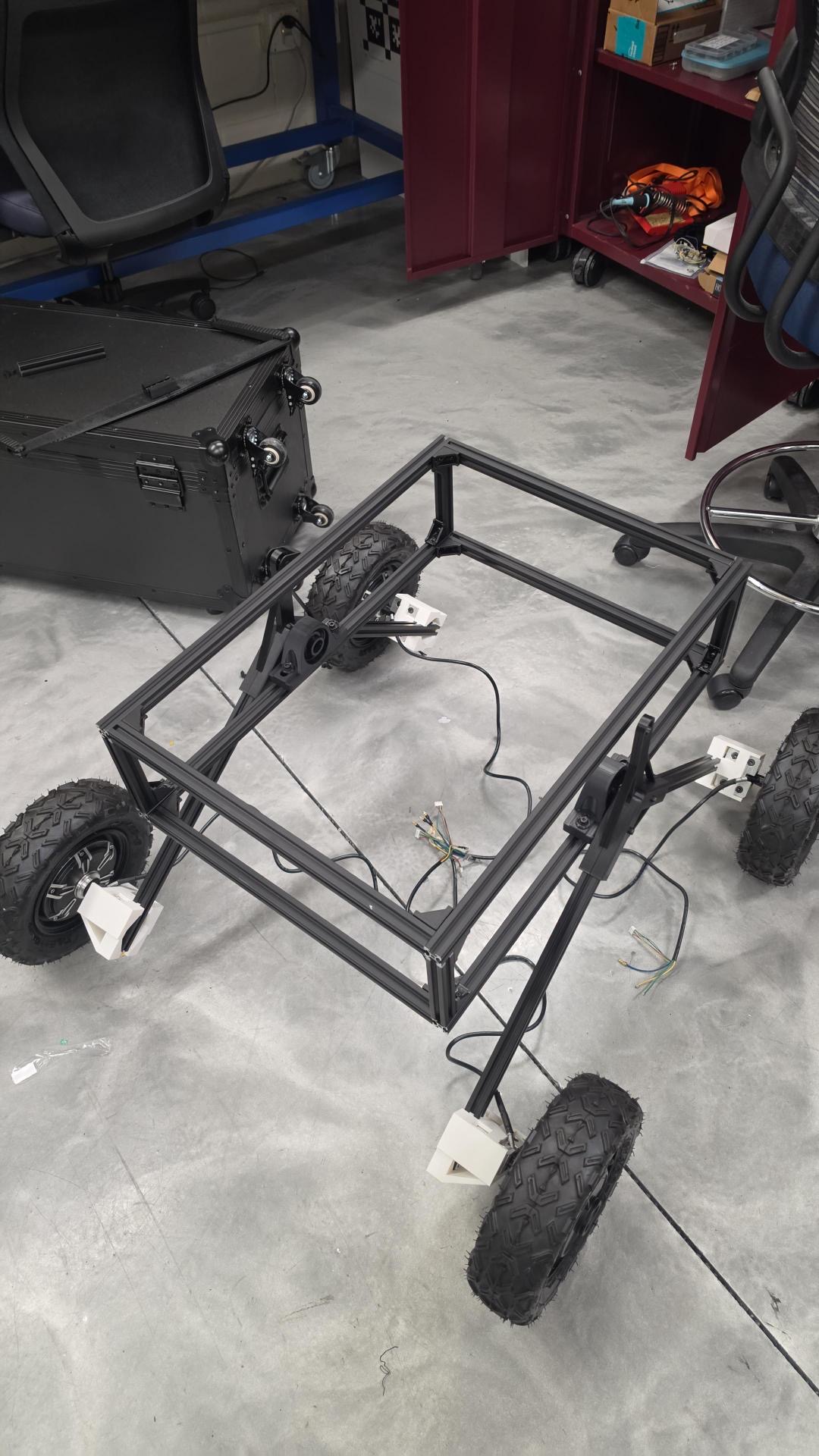
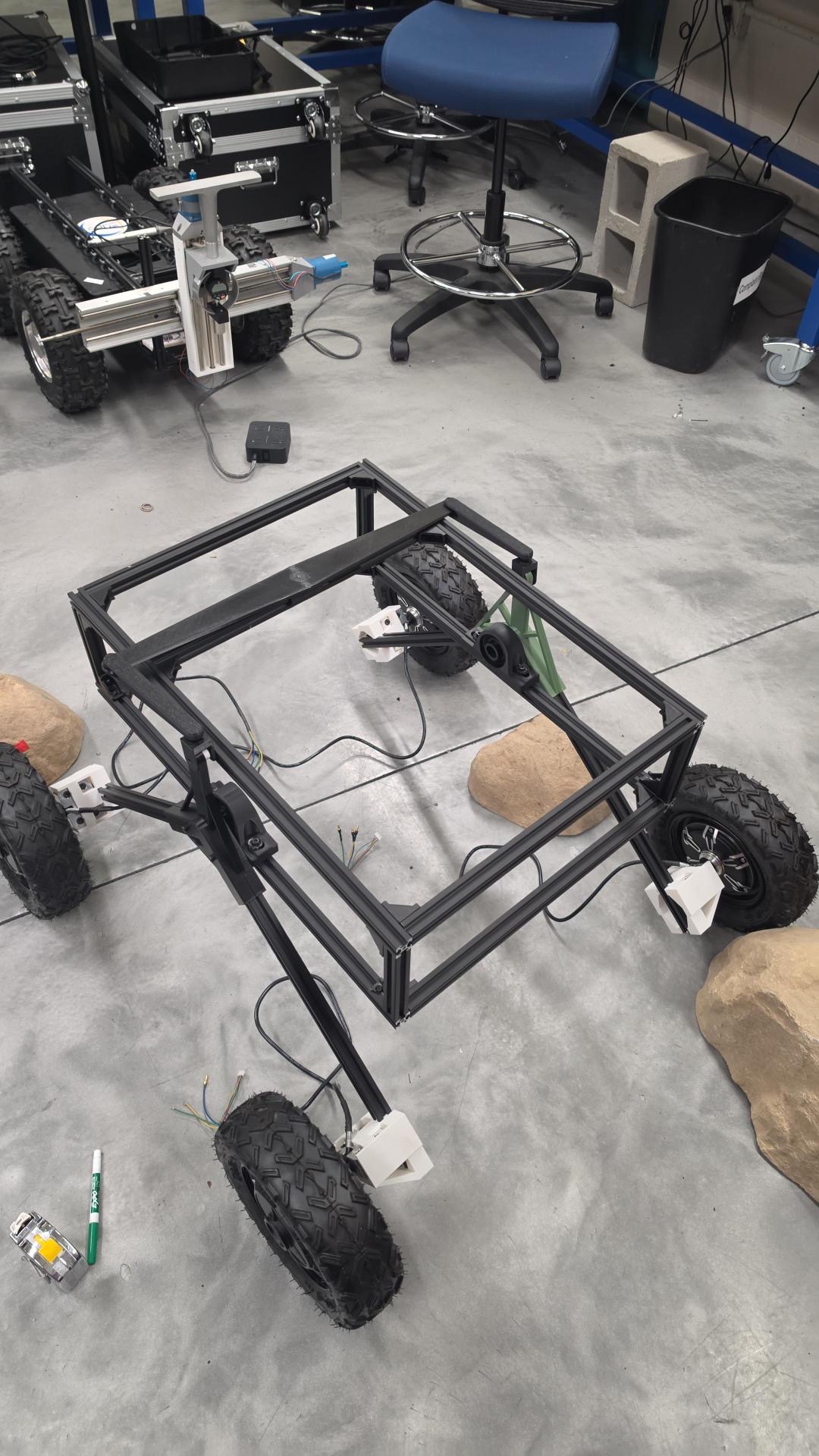
The second photo documents the next suspension assembly update. My focus remains the frame and its mounting interfaces as the mobility hardware is integrated.
Assembly is ongoing. The developing hardware provides a basis for checking component fit and alignment before structural verification and mobility testing.
What is a rocker-bogie system?
A rocker-bogie is an articulated suspension used on six-wheel planetary rovers, including NASA’s Curiosity and Perseverance. Each side combines a larger rocker link with a smaller, two-wheel bogie. The links pivot as the wheels encounter rocks or depressions, allowing the wheels to follow different ground heights.
How the rocker, bogie, and differential work
| Element | Purpose in a typical rocker-bogie system |
|---|---|
| Rocker | Connects one wheel and the bogie to the body-side pivot, allowing the three-wheel assembly to articulate relative to the chassis. |
| Bogie | Supports the other two wheels on a pivoting link so they can follow changes in terrain height. |
| Differential linkage | Couples the left and right rockers to the body, moderating body pitch as either side rises or falls. |
The suspension articulates passively in response to terrain; wheel-drive motors provide locomotion. This arrangement helps maintain wheel contact and distribute loads while limiting body tilt. These are principles of the suspension architecture, with our rover’s performance still to be evaluated.
Designing the mechanical interfaces
Wheel loads pass through the suspension links, shafts, bearings, and supports into the chassis. Bearing alignment and bracket placement therefore connect the frame design directly to the mobility system. Joint stiffness and assembly access are considerations for the next analysis and integration steps.
Frame design and component selection
| Design input | My work | Current evidence |
|---|---|---|
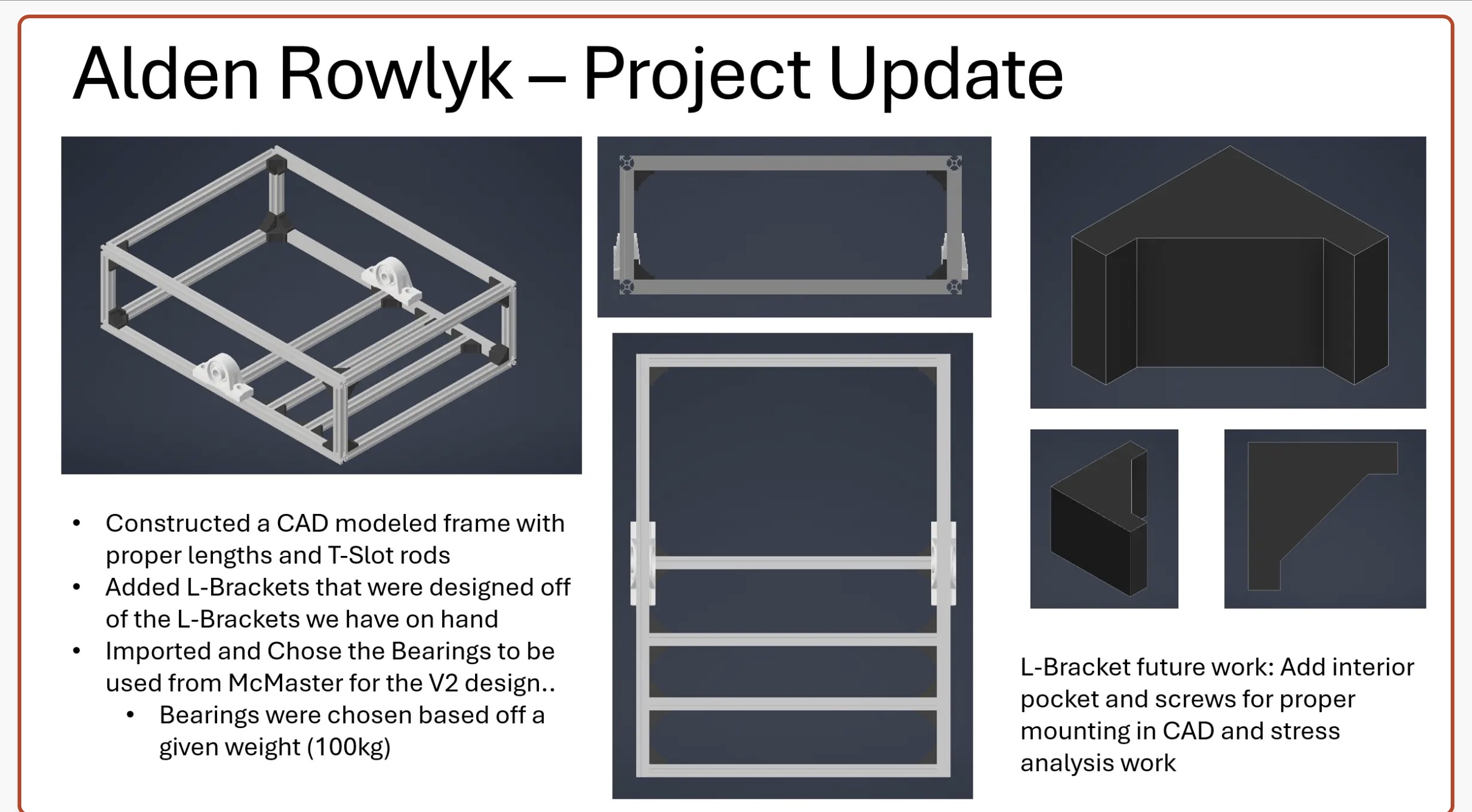
| Required chassis dimensions | Modeled T-slot extrusions at the required lengths. | CAD layout and physical frame assembly. |
| Hardware available in the lab | Created L-bracket models based on the existing parts. | Bracket geometry represented in CAD; mounting details remain in development. |
| 100 kg preliminary mass assumption | Selected and imported McMaster-Carr bearing models for the V2 design. | Component selection input, not a verified load capacity. Load distribution and joint reactions still require analysis. |
Next steps
Continue the assembly and refine bracket pockets and mounting details. Stress analysis of the frame and connections, structural verification, and mobility evaluation remain ahead.
The work is developing my experience in rover structures, mechanical interfaces, component selection, and design for assembly.